
 Continue With Google
 continue with facebook




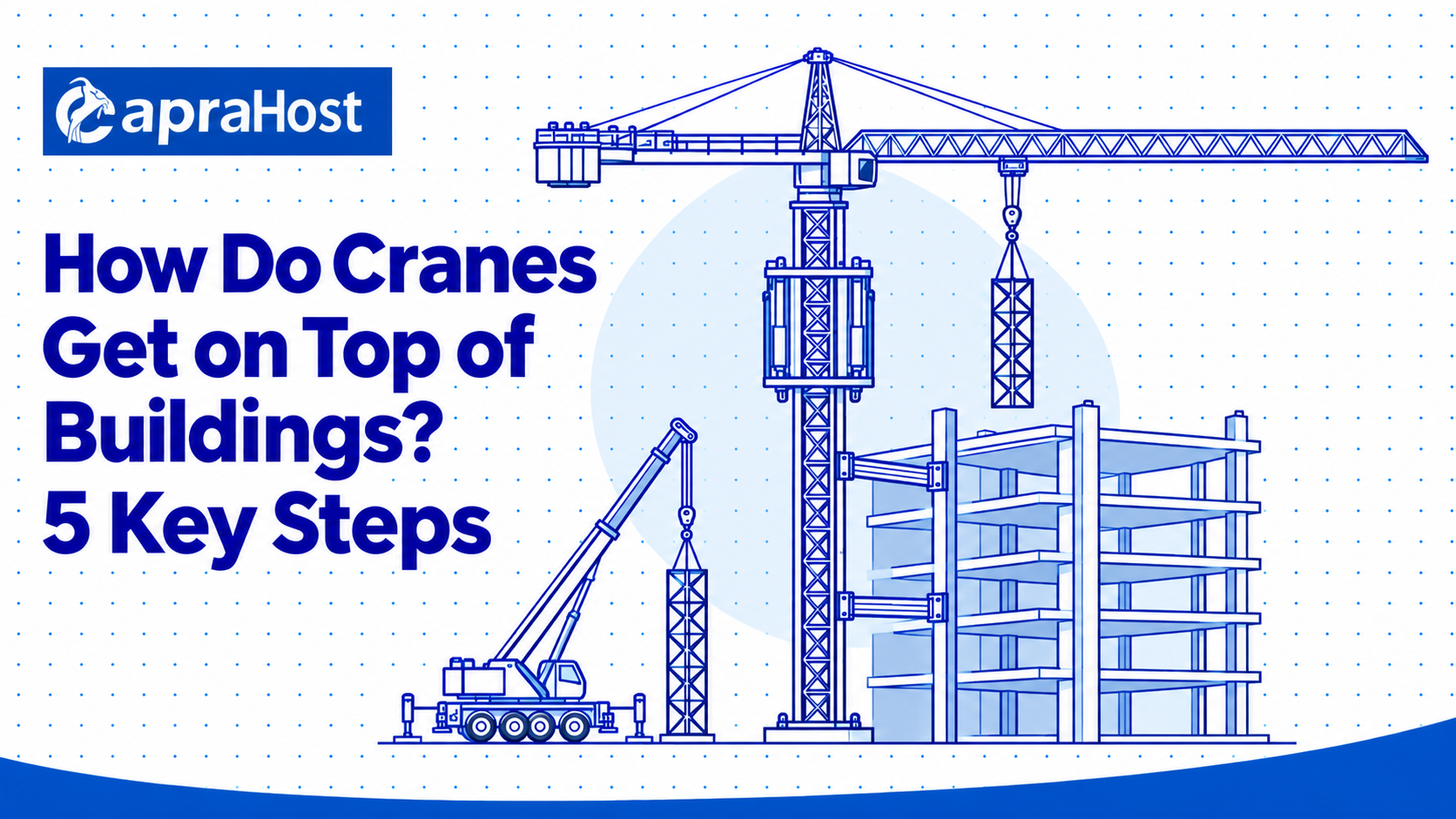
Tower cranes play an important role in constructing tall buildings and skyscrapers. But how do cranes get on top of buildings? Most start on the ground and grow taller as construction progresses. Workers use mobile cranes, hydraulic climbing systems, and steel mast sections to raise them safely.
Some tower cranes climb alongside buildings, while others rise through the building’s central structure. These methods allow construction crews to lift heavy materials as each new floor takes shape. Special foundations, supports, and counterweights help keep the cranes stable.
This article explains how tower cranes reach skyscraper heights in five simple steps. You’ll also learn how they stay secure and how workers remove them after construction. The explanation covers the complete process, from initial assembly to final dismantling.
How Do Cranes Get on Top of Buildings?
Cranes get on top of buildings through ground assembly, hydraulic climbing systems, or direct rooftop installation. Most tower cranes begin at ground level, where a mobile crane assembles their main components. These include the steel mast, lifting jib, rotating unit, and counterweights. As construction progresses, the crane rises to maintain its working height above the building.
Self-climbing tower cranes use hydraulic jacks to raise their upper structure. The lifting system creates space for workers to insert another steel mast section. According to Liebherr, one climbing system uses two lifting stages to accommodate a 2.5-meter section. Repeating this process allows the tower to grow as the skyscraper rises.
Other cranes climb through an opening inside the building, using specially designed structural supports. Rooftop cranes may instead arrive as separate components lifted by another crane or specialized equipment. Not every crane seen above a skyscraper actually sits on its roof. Many remain supported from the ground or within the building throughout construction.
How Are Tower Cranes Assembled on Construction Sites?
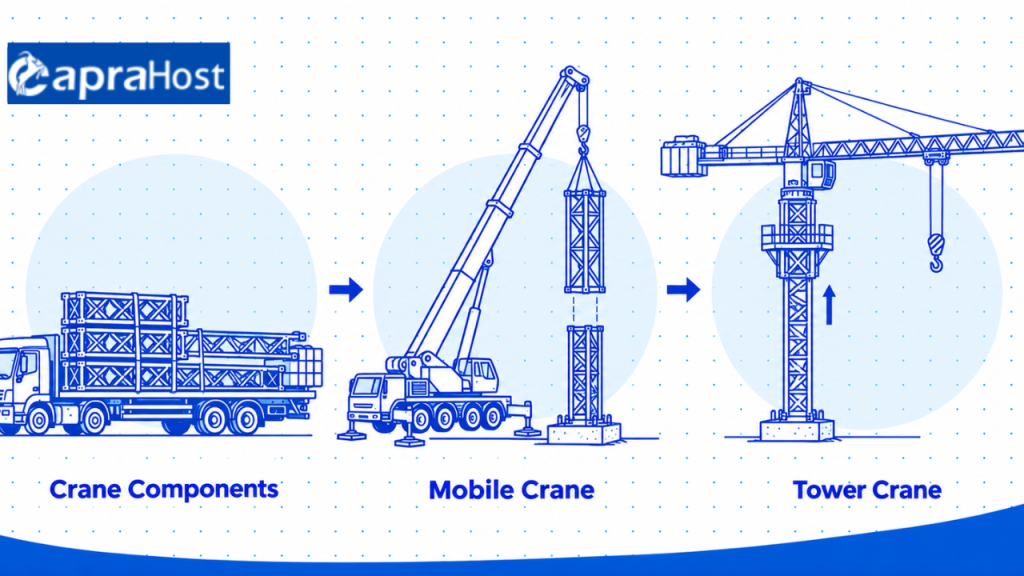
Tower cranes are assembled by delivering separate components, preparing a foundation, and lifting the main sections into position. A mobile crane normally handles the initial lifting work before the tower crane becomes operational. The process follows an engineering plan that considers ground conditions, available space, and crane specifications.
Transporting Crane Parts to the Construction Site
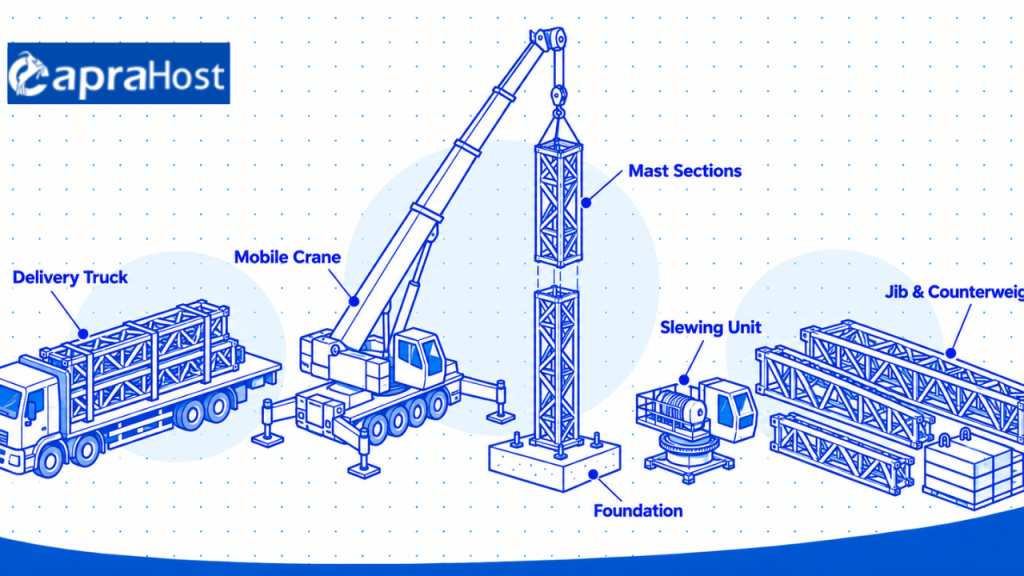
Tower cranes are transported in separate components rather than as complete machines. These include steel mast sections, lifting arms, counterweights, an operator cabin, and a rotating assembly. Flatbed trucks carry the components from storage yards or equipment suppliers to the construction site. Workers then organize the delivered equipment according to the assembly plan.
The number of truckloads depends on the crane model and its configuration. For example, Liebherr states that its NC-LH 12-55 requires four trucks or containers for transportation. Its design allows three jib sections to fit on one standard truck or inside one container. This modular arrangement makes moving large crane components through construction areas more practical.
Building the Foundation and Assembling the Crane
Construction crews prepare a foundation designed to carry the crane’s weight and lifting forces. A common arrangement uses reinforced concrete with embedded steel anchors supporting the crane mast. Other crane configurations use engineered base frames or structural supports inside the building. The foundation must meet the approved design requirements before assembly begins.
The initial assembly follows a planned sequence, although exact procedures vary between crane models. A mobile crane lifts the mast sections and upper components into position. Qualified workers connect the structural components and install the required lifting equipment. The main stages are:
- Install the base: Secure the first mast section to the prepared foundation or engineered support.
- Build the tower: Lift and connect mast sections to reach the required initial height.
- Install the rotating assembly: Attach the slewing unit that allows the crane to turn.
- Attach the lifting arms: Install the jib, counter-jib, and counterweights in the approved sequence.
- Inspect the crane: Check structural connections, electrical systems, and lifting mechanisms before operation.
After assembly, qualified personnel carry out the required inspections and functional checks. The crane must meet applicable operating requirements before it begins regular lifting work. Once approved, it can lift construction materials such as steel beams, concrete components, and building equipment.
How Do Tower Cranes Climb and Get Taller?
Tower cranes climb higher by using hydraulic lifting equipment to create space for new steel mast sections. This method is called self-climbing because the crane uses its own specialized climbing system. The process increases tower height without dismantling and rebuilding the entire crane. It is commonly used when an external tower crane must rise alongside a growing skyscraper.
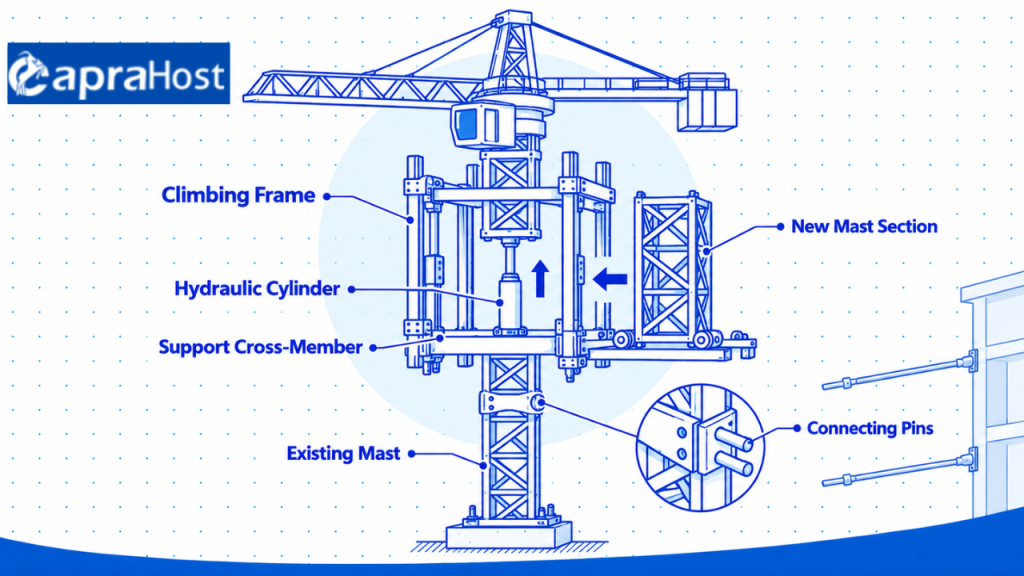
The hydraulic system includes a lifting cylinder, supporting cross-member, and guide frame. These components work together to raise and temporarily support the crane’s upper assembly. Liebherr describes a system that provides space for a 2.5-meter mast section using two climbing stages. The climbing operation follows three main stages.
Step 1: Hydraulic Jacks Lift the Crane’s Upper Section
Hydraulic jacks raise the crane’s upper assembly while a climbing frame guides and supports its movement. The frame fits around the mast and connects with the upper crane structure. A hydraulic cylinder presses against a supporting cross-member to generate the lifting force. The upper assembly rises gradually while the existing mast remains supported.
Temporary support components hold the raised assembly between the hydraulic lifting stages. The hydraulic cylinder can then reset for the next controlled movement. This creates enough vertical space to install a new mast section. In this external climbing arrangement, the crane’s ground foundation stays in place.
Step 2: Workers Insert a New Mast Section
Workers lift a new steel mast section into the opening created by the climbing equipment. The mast section is a rigid steel framework designed to connect with the existing tower. The crane’s own hook can lift the section from the ground into position. Workers guide it according to the manufacturer’s approved climbing procedure.
The new section must align correctly with the tower above and below it. Its connecting points must match the existing mast design. The climbing frame continues supporting the upper assembly while the connection is prepared. No normal lifting operation resumes until the required climbing checks are complete.
Step 3: The Mast Is Secured and the Process Repeats
Workers secure the new mast section using the approved bolts or connecting pins. After checking the connections, the climbing system transfers the upper structure’s weight onto the extended tower. The hydraulic equipment returns to its required operating position. The crane can resume work once the necessary inspections are completed.
Construction crews repeat this process whenever additional crane height is needed. Steel tie-ins may connect the growing mast to the building for structural support. These connections help the tower resist forces from wind and lifting operations. The crane grows section by section rather than being lifted onto the completed skyscraper.
Different Ways Cranes Reach the Top of Skyscrapers
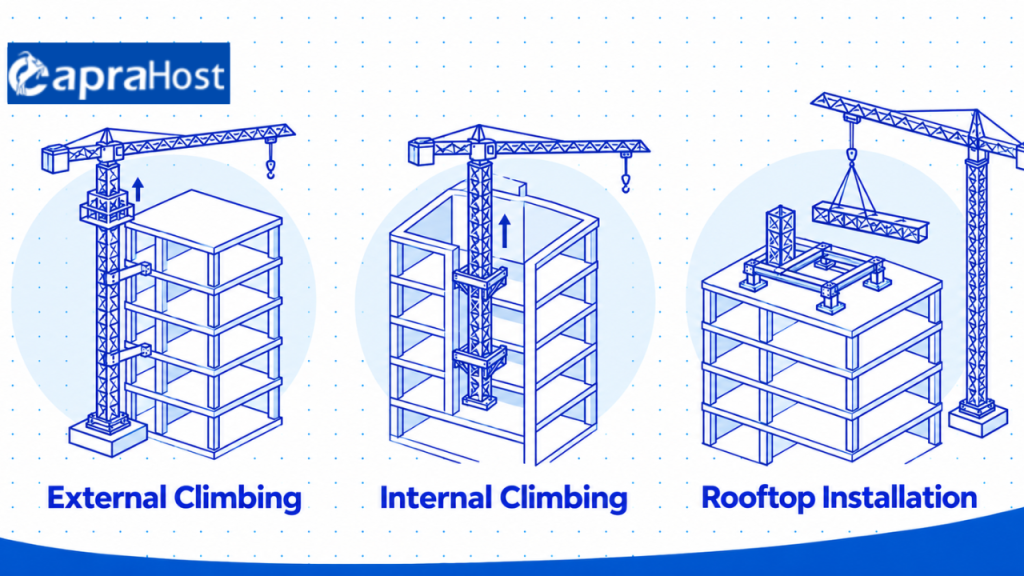
Cranes reach skyscraper heights through three main arrangements: external climbing, internal climbing, and rooftop installation. The correct method depends on the building design, available construction space, and lifting requirements. Each arrangement uses different structural supports and installation equipment.
External Climbing: Growing Alongside the Building
External climbing allows a tower crane to grow taller beside a building while its foundation remains fixed. The crane begins on an engineered foundation outside the structure. As construction rises, steel collars and tie-in braces connect the mast to the building. Hydraulic climbing equipment then creates space for additional mast sections.
This method lets the crane maintain a suitable lifting height above the active construction area. It also keeps the crane’s main mast outside the building’s interior. The support arrangement depends on the tower height and structural design. External climbing is useful where the site provides enough room for an outside crane.
Internal Climbing: Rising Through the Building
Internal climbing moves the crane upward through a prepared opening inside the building. The opening may be part of the concrete core or an elevator shaft under construction. Hydraulic equipment raises the crane to a higher support position as new floors become available. Engineers design climbing frames and structural supports to carry its loads.
Unlike external mast extension, some internal systems lift the crane’s existing tower without adding mast sections. For example, Liebherr’s HC-L series supports internal climbing using hydraulic equipment and building-mounted climbing frames. This arrangement can help construction crews work within crowded urban sites. It also reduces the need for a large crane foundation outside the building.
Rooftop Installation Using Another Crane
Rooftop installation involves lifting separate crane components onto a building and assembling them on engineered supports. Another crane may lift the components from the ground or a nearby structure. Construction crews then assemble the rooftop crane according to its approved installation plan. The supporting structure must safely transfer the crane’s loads into the building.
For example, Liebherr reported a rooftop derrick installation at Paris’s Opus 12 tower in 2026. Six helicopter flights carried large components onto the roof, while a goods lift transported smaller equipment. The project used a specially designed steel substructure to support the crane. This demonstrates why rooftop installation requires careful engineering and planning.
How Do Tower Cranes Stay Stable on Tall Buildings?
Tower cranes stay stable through engineered foundations, counterweights, structural supports, and controlled lifting loads. Every crane must support its own weight while handling construction materials. Engineers consider these forces when selecting the foundation and support arrangement. The crane’s design must also account for wind and movement during operation.
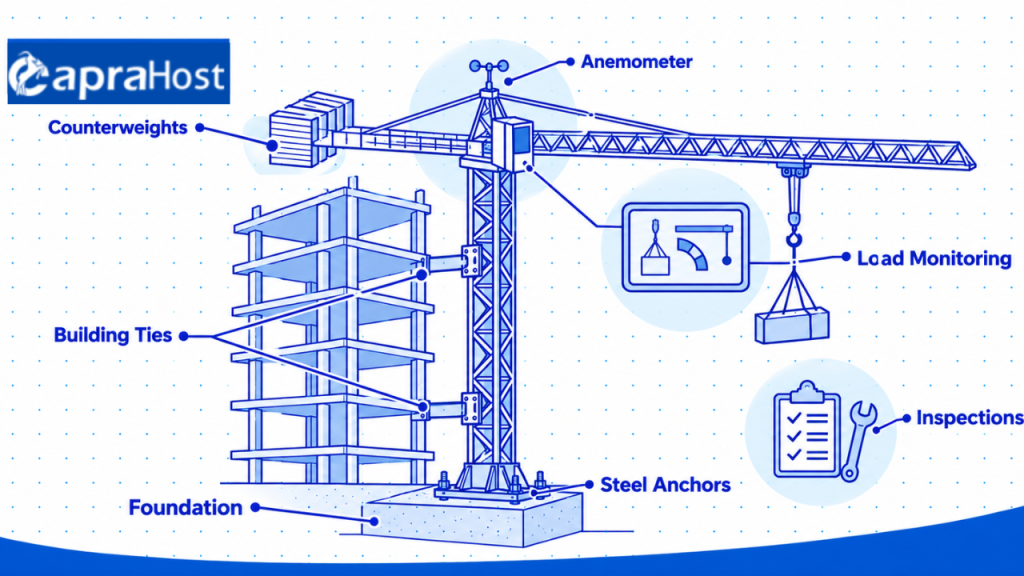
A reinforced concrete foundation can transfer the crane’s weight and lifting forces into the ground. Steel anchors connect the crane mast to its supporting structure. Other arrangements use engineered supports within the building instead of a ground-level foundation. The correct foundation depends on the crane model and site conditions.
Counterweights help balance the loads carried by the crane’s lifting jib. They are usually positioned on the counter-jib, opposite the main lifting arm. Their weight and location follow the manufacturer’s specified configuration. Counterweights alone cannot prevent a crane from overturning without adequate structural support.
As a tower crane grows, steel tie-ins may connect its mast to the building. These connections help resist horizontal forces, including those created by wind. Anemometers measure wind speed, while monitoring systems help operators stay within equipment limits. Climbing and lifting operations must stop when conditions exceed the applicable safe limits.
Regular inspections also help identify damage, wear, or unsafe components. Under OSHA regulation 1926.1412, covered construction cranes in the United States require comprehensive inspections at least every 12 months. The regulation also includes checks before or during operating shifts. Together, these measures help maintain crane stability throughout construction.
How Do They Get Cranes Off the Top of Buildings?
Construction crews remove tower cranes by dismantling them into separate components and lowering the components to the ground. Some external climbing cranes can reduce their height by removing mast sections. Other cranes require a smaller rooftop derrick or a larger crane positioned nearby. The chosen method depends on the building design, crane position, and available lifting space.
Dismantling the Main Tower Crane
Workers dismantle a tower crane according to an engineered removal plan and the manufacturer’s procedures. Engineers first determine how each major component will be supported during removal. Crews inspect lifting equipment and establish controlled work areas before beginning. Weather conditions, including wind speed, also affect when dismantling can proceed.
The exact disassembly sequence depends on the crane model and lifting arrangement. Counterweights, lifting arms, and mast sections must be removed in a carefully controlled order. Supporting equipment carries the weight of components while workers disconnect them. The crane cannot simply be taken apart without maintaining its required balance and stability.
Removing the Remaining Parts with Smaller Cranes
A smaller rooftop derrick can lift and lower components from a larger tower crane. The main crane may help assemble the derrick before dismantling begins. Once the derrick becomes operational, it assists with removing the larger crane. Smaller lifting equipment or building hoists can then help remove the remaining derrick components.
A real example comes from The Mark skyscraper in Seattle. According to Apex Steel, its team used a Liebherr 316 crane to dismantle a larger Liebherr 550 crane. A derrick subsequently helped remove the smaller tower crane. The building’s permanent maintenance equipment assisted with the final derrick removal.
Not every construction project needs this sequence of progressively smaller cranes. Some tower cranes can be dismantled using ground-based mobile cranes. Others can climb downward as mast sections are removed. The goal is to remove every temporary crane component without damaging the completed building.
Why Do Cranes Seem to Appear Out of Nowhere?
Tower cranes seem to appear suddenly because crews can assemble their main structures within a short construction window. Individual components arrive separately, so the complete crane is not visible beforehand. A mobile crane then lifts the mast, jib, and other components into position. People who miss the assembly operation may notice a fully erected crane the following day.
According to Crane & Transport Briefing, Stevenson Crane Service erected a tower crane to a 188-foot hook height in one day. The company stated that a standard tower crane typically required two to three days for assembly. This example comes from a specific 2008 project, not a universal installation time. Later hydraulic climbing operations can also make an existing crane appear significantly taller.
How Do Crane Operators Get to the Top?
Crane operators reach elevated cabins using internal mast ladders, construction lifts, or access from the building. Many tower cranes contain fixed ladders inside their steel mast. Operators climb through protected access routes and use resting platforms where provided. The exact journey depends on crane height, access design, and construction progress.
On high-rise projects, a construction elevator may take operators to a nearby floor. They can then follow an approved access route to reach the crane cabin. Some specialized arrangements use powered personnel lifts to reduce the climbing distance. Fall protection, secure access platforms, and proper training help workers reach their operating positions safely.
Frequently Asked Questions
Do Tower Cranes Build Themselves?
Some tower cranes can increase their own height, but they do not assemble themselves without workers. Self-climbing cranes use hydraulic equipment to create space for new mast sections. Self-erecting cranes are different because their design allows the crane to unfold or assemble from a transport configuration.
Do Cranes Actually Sit on Top of Buildings?
Some cranes are mounted directly on rooftops, but many tower cranes stand beside or inside buildings. External tower cranes may remain connected to ground-level foundations throughout construction. Internal climbing cranes use engineered supports within the building as they move upward.
Why Are Cranes Sometimes Left on Top of Skyscrapers?
Temporary cranes may remain visible because construction or rooftop equipment installation is still underway. Removing a crane requires careful planning, suitable lifting equipment, and acceptable weather conditions. Some buildings also have permanent maintenance equipment that may resemble a small crane.
How Do Crane Operators Go to the Bathroom?
Crane operators generally plan restroom breaks around their work schedules and available site facilities. Many must descend using the crane’s approved access route or reach facilities on a nearby building floor. Arrangements vary, so operators follow their employer’s site procedures for breaks and access.
Can Strong Winds Make Tower Cranes Fall Over?
Strong winds create additional forces that can threaten crane stability if operating limits are exceeded. Engineers design tower cranes to withstand specified wind conditions, including appropriate out-of-service arrangements. Operators must follow manufacturer requirements and stop lifting or climbing operations when conditions become unsafe.
Conclusion
Cranes reach the tops of buildings through planned assembly, hydraulic climbing, and specialized installation methods. Most tower cranes begin near ground level and increase their working height as construction progresses. Others move upward through building cores or are assembled directly on engineered rooftop supports.
The five-step process begins with delivery and assembly, continues through climbing, and ends with dismantling. Foundations, counterweights, and structural connections help support the crane throughout its work. Once construction finishes, crews remove the equipment using an approved dismantling plan. This explains how enormous cranes can build skyscrapers without needing an even larger crane above them.