
 Continue With Google
 continue with facebook




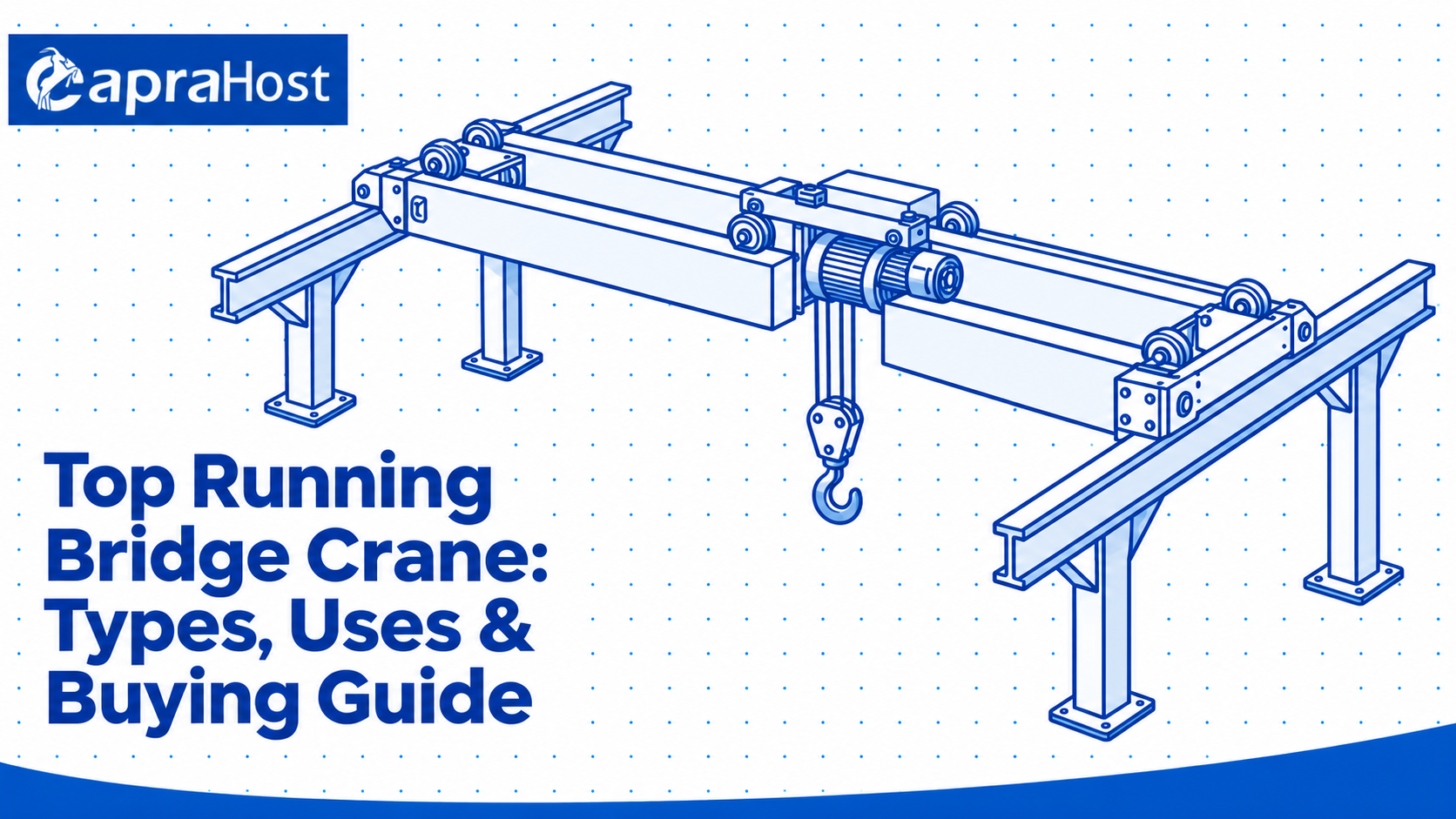
A top running bridge crane is an overhead lifting system that moves heavy loads across industrial workspaces. It travels on rails mounted above runway beams, keeping the main lifting equipment off the floor. A trolley and hoist lift, lower, and position materials within the working area.
These cranes are commonly used in manufacturing plants, steel mills, warehouses, and fabrication workshops. They come in single girder and double girder designs for different lifting requirements. Choosing the right configuration depends on load capacity, available space, building support, and operating frequency.
This guide explains how top running bridge cranes work, their components, types, specifications, and benefits. It also compares top running and under running cranes for different industrial applications. You’ll learn about selection, installation, safety, maintenance, and costs before making a purchasing decision.
What Is a Top Running Bridge Crane?
A top running bridge crane is an overhead crane supported by wheels traveling on rails above runway beams. The term “top running” describes the position of the bridge’s travel system. Unlike an under running crane, the bridge rides on top of its runway rather than hanging below it.
The crane consists of a moving bridge, trolley, hoist, and supporting runway structure. Its bridge travels along the building, while the trolley moves across the bridge. This arrangement allows the operator to lift and position loads within a rectangular working area.
Top running cranes are designed for industrial material handling, including machinery installation, steel fabrication, and equipment maintenance. They can serve lighter lifting tasks or demanding heavy-duty operations, depending on their design. For example, SEVENCRANE advertises product configurations with capacities ranging from 1 to 500 tons.
How Does a Top Running Bridge Crane Work?
A top running bridge crane works through three movements: bridge travel, trolley travel, and vertical lifting. Powered end trucks move the bridge along two parallel runway rails. The trolley moves sideways across the bridge, while the hoist raises or lowers the load.
The operator controls these movements using a pendant controller, radio remote, or operator cabin. Electric motors power the lifting and traveling mechanisms in typical motorized systems. Together, these movements allow material to be transferred between different positions within the crane’s working area.
Main Components of a Top Running Bridge Crane
The crane’s main components support its structure, movement, lifting function, and control. Each component has a specific role in safe material handling. The following parts work together during lifting operations:
| Component | Main function |
| Bridge girder | Supports the trolley and hoist |
| End trucks | Carry the bridge wheels and travel mechanism |
| Runway beams | Support the crane along its operating path |
| Runway rails | Guide the wheels during bridge travel |
| Trolley | Moves the hoist across the bridge |
| Hoist | Raises and lowers the load |
| Control system | Controls lifting and horizontal movement |
According to OSHA 29 CFR 1910.179, crane span is measured between the centerlines of the runway rails. This measurement helps determine the bridge dimensions and required runway arrangement. Correct component selection also depends on the crane’s rated load and expected operating conditions.
Types of Top Running Bridge Cranes
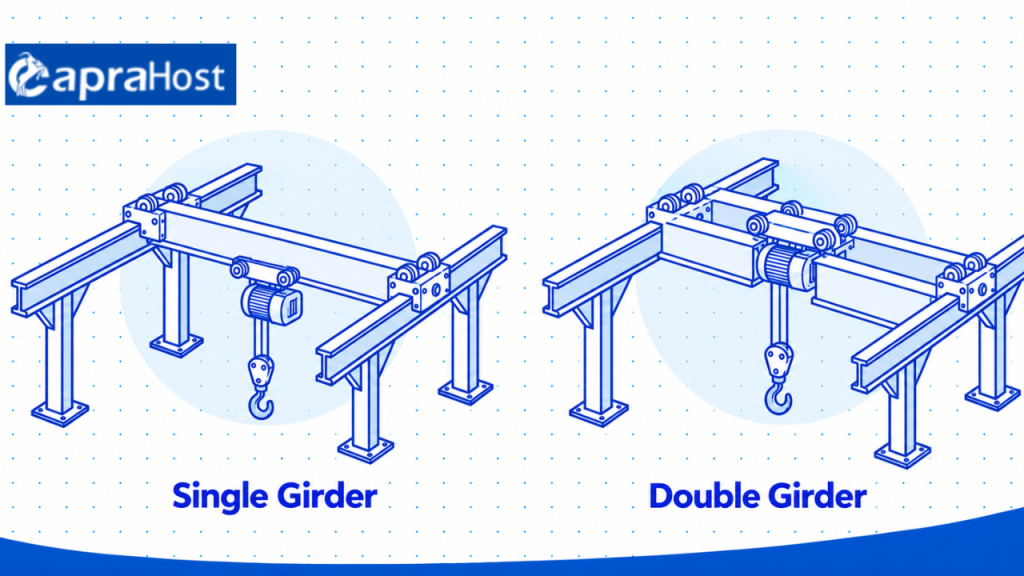
The two main types of top running bridge cranes are single girder and double girder designs. Both use elevated runway rails but differ in bridge construction and hoist arrangement. Their suitability depends on lifting capacity, span, hook height, and operating requirements.
Single Girder Top Running Bridge Crane
A single girder top running bridge crane uses one main bridge beam supported by end trucks. Its trolley and hoist typically travel along the lower flange of the girder. This arrangement generally uses less structural material than a comparable double girder system.
Single girder cranes are commonly used in warehouses, assembly lines, and maintenance workshops. They can provide an economical solution when load capacity and lifting height requirements permit. SEVENCRANE describes single girder configurations commonly rated up to 25 tons, although actual product limits vary.
Double Girder Top Running Bridge Crane
A double girder top running bridge crane uses two parallel bridge beams to support its lifting system. The trolley commonly travels on rails above the girders, with the hoist positioned between them. This arrangement can provide greater hook height and support demanding lifting requirements.
Double girder cranes are common in steel mills, power plants, and heavy manufacturing facilities. They are often selected for heavier loads, longer spans, or demanding duty requirements. The final lifting capacity depends on the crane’s engineered design and supporting structure.
Top Running vs. Under Running Bridge Crane
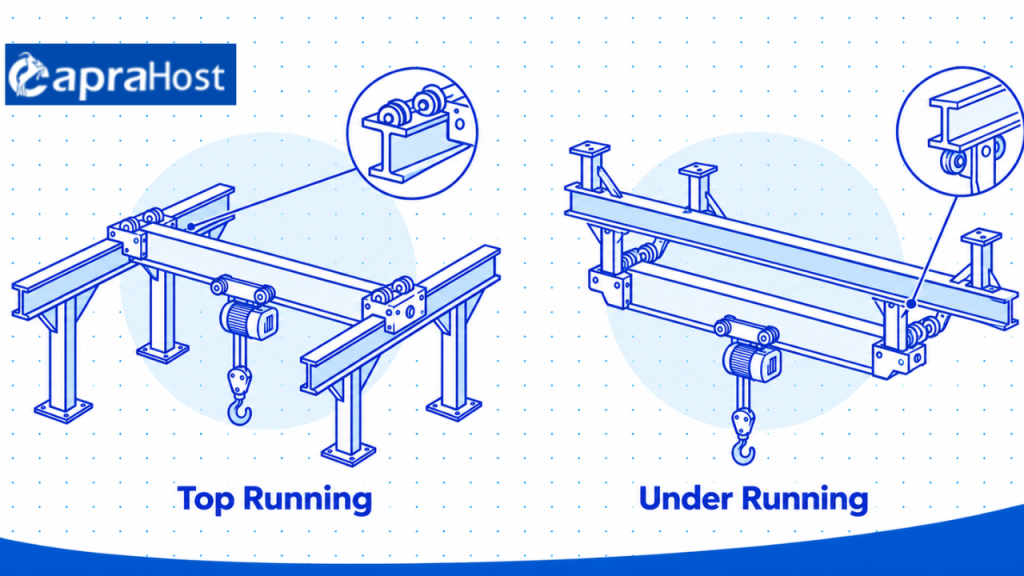
The main difference between top running and under running bridge cranes is their bridge support arrangement. Top running cranes travel on rails above the runway beams. Under running cranes hang from the lower flanges of the runway structure.
Top running designs generally support heavier loads and can accommodate longer spans. Under running designs often suit lighter lifting duties and buildings with suitable overhead support. However, actual hook height and usable working space depend on the complete crane arrangement.
| Feature | Top Running Crane | Under Running Crane |
| Bridge support | Above runway beams | Beneath runway beams |
| Load capacity | Generally supports higher capacities | Generally used for lighter loads |
| Span | Suitable for longer spans | Often used for shorter spans |
| Hook height | Can offer greater lifting height | Depends on configuration |
| Support structure | Building columns or freestanding supports | Suitable overhead structure |
| Typical applications | Heavy manufacturing, steel production | Assembly, maintenance workshops |
Choose a top running crane when higher capacity, longer span, or greater hook height is required. Under running cranes may be suitable when the building has an appropriate supporting structure. Both options require evaluation of clearances, load requirements, and installation costs.
Key Specifications of a Top Running Bridge Crane
The main specifications include rated capacity, span, lifting height, duty classification, travel speed, and wheel loads. These values determine the crane’s performance and suitability for a facility. Each specification should match the intended lifting application.
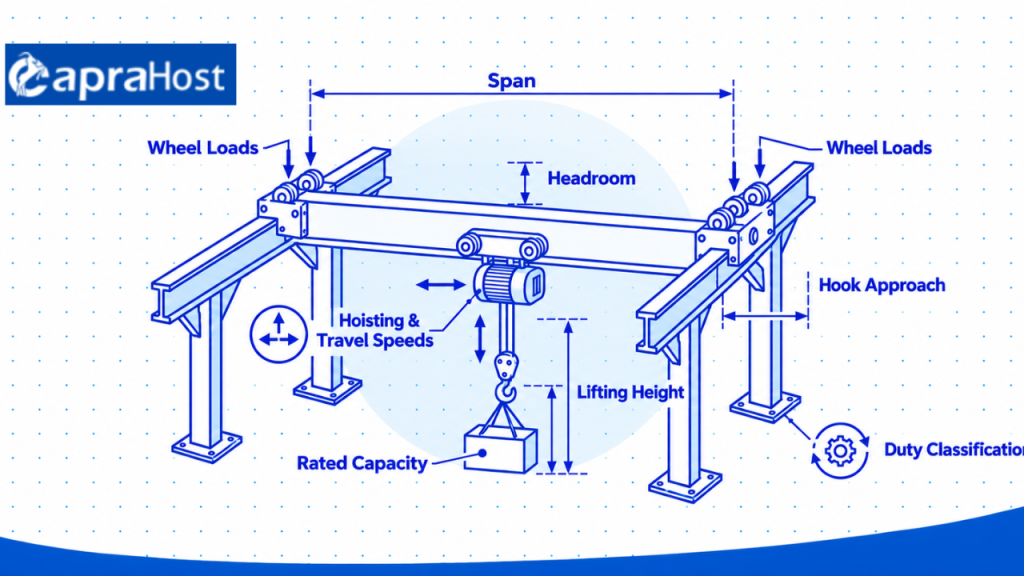
- Rated lifting capacity: The maximum permitted load stated on the crane’s rating plate.
- Crane span: The distance between the centerlines of the two runway rails.
- Lifting height: The vertical distance available for raising or lowering the hook.
- Headroom: The vertical space required by the crane and lifting mechanism.
- Hook approach: How close the hook can reach the limits of its working area.
- Duty classification: The operating demands associated with load weight, frequency, and service conditions.
- Hoisting and travel speeds: The rates of vertical lifting and horizontal movement.
- Wheel loads: The forces transferred from crane wheels into the supporting runway structure.
For example, SEVENCRANE lists spans of 4.5–31.5 meters and lifting heights of 3–30 meters. These figures describe its advertised product range rather than universal engineering limits. The appropriate specifications must be confirmed for each installation.
Advantages and Limitations of Top Running Bridge Cranes
Top running bridge cranes support heavy lifting, wide working areas, and efficient floor space use. However, they also require suitable runway structures and careful installation planning. Understanding both advantages and limitations helps buyers evaluate their suitability.
Main Advantages
- Heavy lifting capability: Engineered configurations can handle demanding industrial loads.
- Longer spans: Suitable systems can cover wide production areas.
- Clear floor space: Elevated lifting equipment reduces the need for floor-based handling equipment.
- Improved hook height: Certain configurations provide more usable vertical lifting space.
- Flexible material handling: Bridge and trolley travel allow loads to move across the working area.
These advantages are useful where machinery, steel components, and industrial equipment require regular movement. The crane can transfer loads between production stations without occupying a permanent travel path on the floor. Actual performance depends on the system’s capacity, configuration, and operating environment.
Important Limitations
- Structural support: Runway beams, columns, and foundations must withstand the required loads.
- Installation expense: Runway construction, electrical connections, and commissioning increase project costs.
- Building clearance: Roof height and surrounding equipment may restrict crane installation.
- Maintenance requirements: Wheels, rails, hoists, and brakes require scheduled inspection.
Existing buildings may need structural modifications before supporting a top running crane. Incorrect runway alignment can also contribute to wheel wear and uneven bridge travel. A qualified engineer should confirm the proposed installation’s suitability.
Common Applications of Top Running Bridge Cranes
Top running bridge cranes are used in manufacturing, steel production, warehousing, maintenance, and heavy industrial operations. Their elevated bridge arrangement allows materials to move across designated work areas. The required crane configuration depends on load weight, lifting frequency, and operating conditions.
- Manufacturing and assembly: Move machinery parts, engines, and production equipment.
- Steel mills and fabrication: Handle steel beams, metal plates, and fabricated structures.
- Warehouses and storage: Lift industrial containers, heavy goods, and equipment.
- Machinery maintenance: Position motors, gearboxes, and heavy machine components.
- Foundries: Handle casting molds, metal components, and specialized loads.
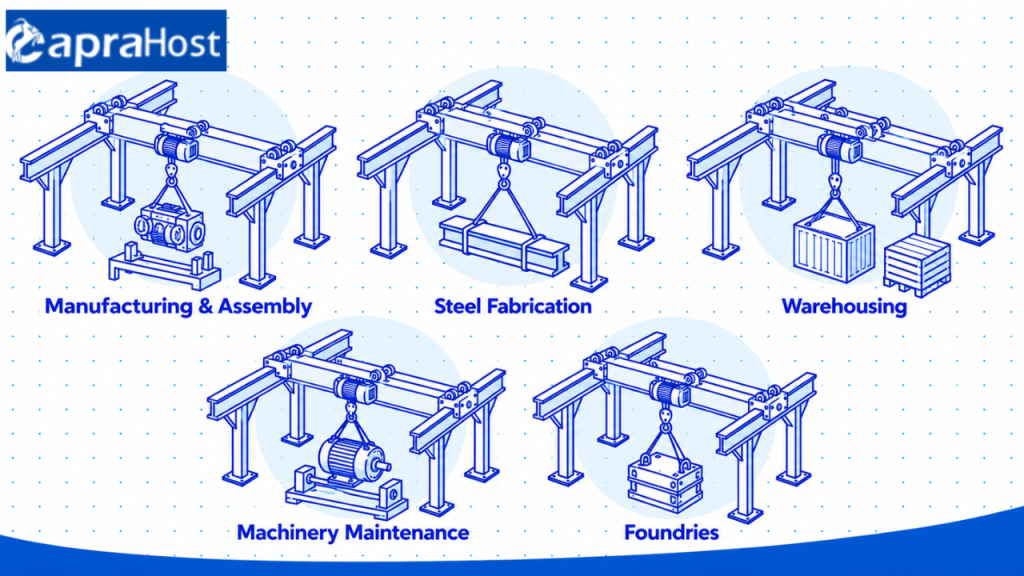
For example, a fabrication workshop may use a single girder crane to move steel components between workstations. A steel mill may require a double girder system for heavier and more frequent lifting. Specialized environments, including molten-metal handling, require purpose-designed equipment and additional safety measures.
How to Choose the Right Top Running Bridge Crane
Choose a top running bridge crane by matching its capacity, span, lifting height, and duty rating to your requirements. The building structure and available clearance also influence crane selection. Follow these six steps before requesting a supplier quotation.
- Determine lifting capacity: Identify the maximum load weight, including lifting attachments. Consider load dimensions and weight distribution.
- Measure span and lifting height: Establish the required distance between runway rails. Check available vertical clearance and hook travel.
- Evaluate operating duty: Estimate lifting frequency, working hours, and typical load weight. Select a suitable duty classification.
- Choose the girder arrangement: Compare single and double girder configurations. Consider capacity, hook height, and cost.
- Check the building structure: Have qualified engineers evaluate columns, foundations, runway support, and clearances.
- Compare supplier quotations: Review technical specifications, warranty terms, installation scope, and service support.
For example, consider a workshop handling machinery weighing up to 8 metric tons. Its supplier must also know the required span, lift height, load dimensions, and operating frequency. An 8-ton load does not automatically make an 8-ton crane suitable for every lifting arrangement.
A useful quotation should identify the proposed crane configuration and rated capacity. It should also clarify whether runway construction, electrical installation, commissioning, and operator training are included. Comparing complete project requirements helps prevent unexpected installation expenses.
Installation and Structural Requirements
Installing a top running bridge crane requires properly designed runway beams, rails, supporting columns, and safe building clearance. The bridge travels along two parallel rails supported by the runway structure. Building-supported arrangements use suitable existing columns, while freestanding runways use independent supports and foundations.
Engineers must evaluate crane weight, maximum wheel loads, horizontal forces, and structural capacity. The runway also needs accurate alignment and suitable electrical power. For covered installations, OSHA 29 CFR 1910.179 specifies minimum overhead and lateral clearances of 3 inches and 2 inches, respectively.
Professional installation includes mechanical assembly, electrical connections, inspection, and commissioning. Testing must follow applicable regulations, manufacturer instructions, and the approved engineering design. The crane should enter service only after the required checks and approvals are complete.
Safety and Maintenance of Top Running Bridge Cranes
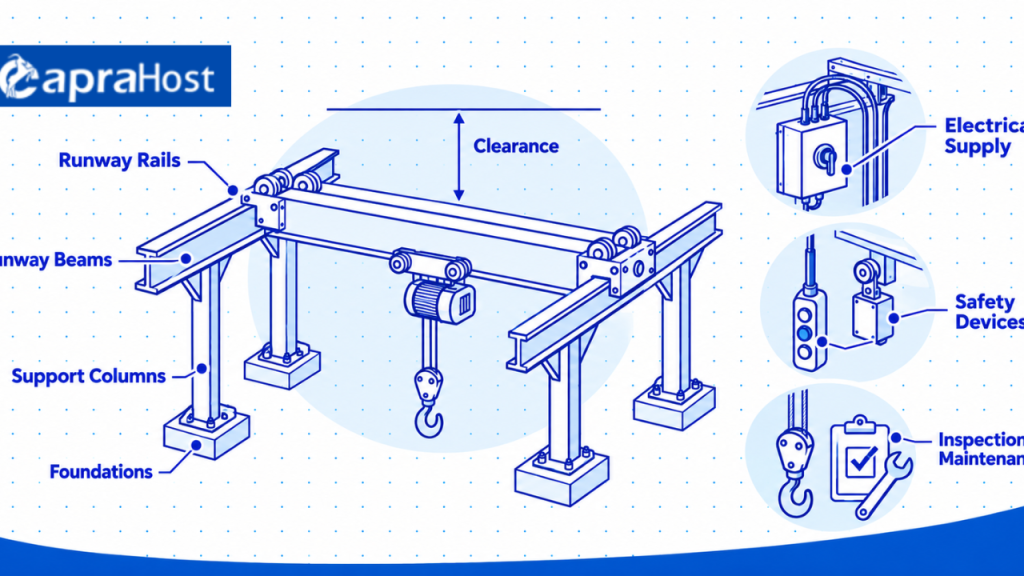
Safe crane operation requires correct load handling, regular inspections, and preventive maintenance. Operators must follow the rated load and approved lifting procedures. Safety equipment helps control crane motion and reduce foreseeable operating hazards.
Important devices include hoist limit switches, holding brakes, emergency stops, and applicable overload protection. Maintenance inspections examine components such as hooks, wire ropes, brakes, wheels, and runway rails. Uneven wheel wear, unusual noises, or bridge skewing may indicate mechanical or alignment problems.
For cranes covered by OSHA 29 CFR 1910.179, frequent inspections occur at daily-to-monthly intervals. Periodic inspections generally occur every 1–12 months, depending on service conditions. These classifications do not replace the specific inspection requirements applicable to each installation.
Relevant technical references include ASME B30 standards and CMAA Specifications 70 and 74. Their applicability depends on the crane configuration and governing jurisdiction. Qualified personnel should evaluate defects and authorize repairs before affected equipment returns to service.
How Much Does a Top Running Bridge Crane Cost?
The cost of a top running bridge crane depends on capacity, span, configuration, installation, and operating requirements. There is no reliable universal price for every crane of the same rated capacity. Manufacturers generally prepare quotations after reviewing the facility’s technical specifications.
Single girder configurations often cost less than comparable double girder systems. Additional expenses may include runway beams, support columns, electrical systems, transportation, and commissioning. Long-term ownership costs include inspections, maintenance, repairs, replacement components, and possible downtime.
Before requesting a quotation, provide the required capacity, span, lifting height, and operating frequency. Include building drawings, available clearances, electrical supply details, and environmental conditions where possible. Compare quotations using the same scope, including warranties, installation responsibilities, and after-sales support.
Frequently Asked Questions
What Is the Difference Between a Top Running Crane and an Overhead Crane?
An overhead crane is a general lifting system with a movable bridge and hoisting mechanism. A top running crane is one type of overhead crane. Its bridge travels on rails positioned above the runway beams.
Can a Top Running Bridge Crane Be Installed in an Existing Building?
Yes, installation may be possible when the building or an independent support structure meets the required load demands. Engineers must check columns, foundations, clearance, and runway requirements. Some buildings require structural reinforcement or a freestanding runway.
Are Top Running Bridge Cranes Suitable for Small Workshops?
Yes, appropriately designed top running cranes can serve smaller workshops. Suitability depends on load capacity, span, available height, and structural support. A lighter single girder configuration may be appropriate for certain workshop applications.
Can a Top Running Bridge Crane Use a Chain Hoist?
Yes, some top running bridge cranes use electric chain hoists. Other configurations use wire rope hoists for different lifting requirements. Hoist selection depends on capacity, lifting height, duty, and manufacturer specifications.
How Long Does a Top Running Bridge Crane Last?
Crane service life depends on design, duty classification, operating conditions, and maintenance quality. Regular inspection and timely repair can help manage equipment wear. A qualified assessment is necessary to evaluate an aging crane’s remaining serviceability.
Conclusion
A top running bridge crane provides overhead material handling for industrial facilities requiring controlled lifting and movement. Single girder and double girder configurations offer different capacity, clearance, and operating characteristics. The right solution depends on load requirements, span, lifting height, duty, and structural suitability.
Before purchasing, review the complete crane specifications and installation requirements. Compare suppliers using the same technical requirements, including equipment, runway, and service scope. Proper selection, professional installation, and planned maintenance support reliable crane operation.