
 Continue With Google
 continue with facebook




The top creativity speakers help organizations develop fresh ideas, solve problems, and build innovative thinking. They combine professional experience with storytelling, practical exercises, and engaging keynote presentations. Their expertise covers business innovation, creative leadership, teamwork, and personal development.
Businesses and conference organizers hire creativity keynote speakers to inspire employees and develop creative skills. Some speakers teach practical innovation methods, while others use storytelling, art, or interactive performances. Choosing the right speaker depends on your event’s goals, audience, and budget.
This guide introduces 10 leading creativity speakers to consider in 2026. You’ll discover their professional backgrounds, keynote topics, presentation styles, and suitable audiences. You’ll also learn how to compare speakers, understand booking costs, and choose the right person for your event.
Quick Comparison of the Top 10 Creativity Speakers
The top 10 creativity speakers bring different approaches to innovation, leadership, storytelling, and creative problem-solving. Duncan Wardle specializes in interactive creativity, while Josh Linkner focuses on practical business innovation. Natalie Nixon connects creativity with leadership, and Erik Wahl demonstrates creative thinking through live art.
The comparison below evaluates four factors: expertise, presentation style, audience suitability, and event relevance. These speakers were selected for their documented experience and distinct contributions to creativity-related topics. This is a practical shortlist, not an official ranking of speaking ability or current booking availability.
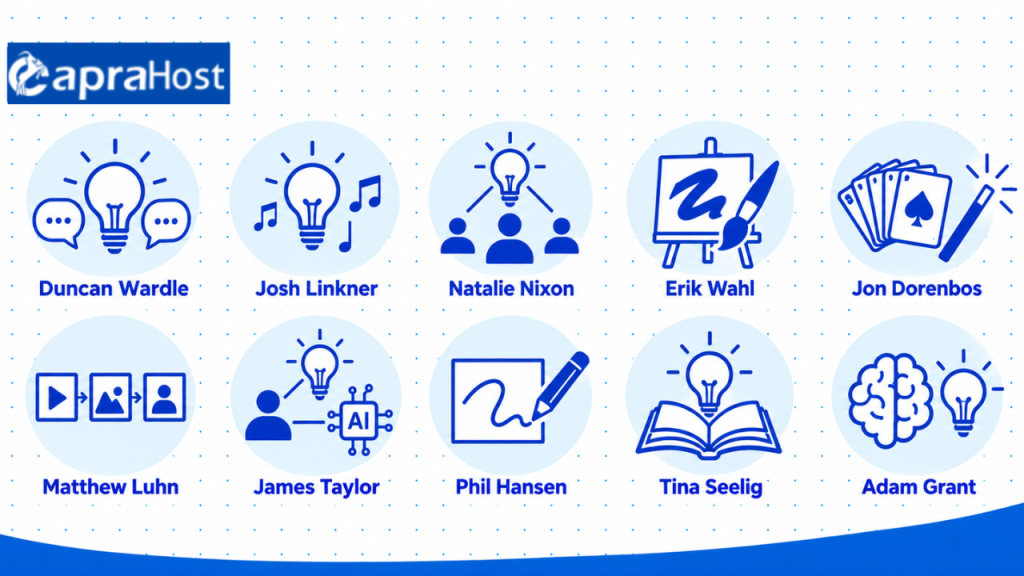
| Speaker | Specialty | Speaking Style | Best For |
| Duncan Wardle | Creative thinking and innovation | Interactive Disney-inspired exercises | Corporate innovation workshops |
| Josh Linkner | Business creativity | Practical frameworks and live jazz | Business conferences |
| Natalie Nixon | Creative leadership | Research-based insights and storytelling | Executive leadership events |
| Erik Wahl | Artistic creativity | Live painting and inspirational storytelling | Large corporate conferences |
| Jon Dorenbos | Resilience and reinvention | Magic performances and personal stories | Employee engagement events |
| Matthew Luhn | Creative storytelling | Pixar-inspired storytelling techniques | Marketing and communication events |
| James Taylor | Collaborative creativity | Interactive exercises and AI-focused discussions | Technology and innovation conferences |
| Phil Hansen | Creativity through limitations | Live art and personal experiences | Team-building and creativity events |
| Tina Seelig | Entrepreneurial creativity | Educational frameworks and practical exercises | University and entrepreneurship events |
| Adam Grant | Original thinking | Psychology research and business examples | Leadership and HR conferences |
Top 10 Creativity Speakers to Know in 2026
These 10 creativity speakers are recognized for their expertise in original thinking, innovation, leadership, and creative communication. Their professional backgrounds include organizations such as Disney, Pixar, Stanford University, and the Wharton School. Each offers a different perspective on developing ideas, overcoming challenges, and applying creativity at work.
1. Duncan Wardle — Best for Creative Thinking and Innovation
Duncan Wardle is a creativity keynote speaker and former Head of Innovation and Creativity at Disney. He spent more than 25 years working at The Walt Disney Company. His experience includes developing creative approaches to entertainment, guest experiences, and organizational innovation.
Wardle’s keynote, The Theory of Creativity, explores how people can rediscover their creative abilities. He teaches techniques for challenging assumptions, generating ideas, and approaching familiar problems differently. His approach also incorporates design thinking, which emphasizes understanding problems before developing solutions.
Unlike traditional lectures, Wardle’s presentations encourage active audience participation. Attendees complete creative exercises designed to demonstrate how imagination can support workplace problem-solving. His sessions focus on making creative thinking more accessible and practical.
Best for: Corporate innovation conferences, leadership meetings, and interactive creativity workshops. His experience is particularly relevant to organizations seeking practical idea-generation methods.
2. Josh Linkner — Best for Business Creativity and Practical Innovation
Josh Linkner is an entrepreneur, bestselling author, jazz guitarist, and creativity keynote speaker. He has founded and led five technology companies and developed frameworks for business innovation. His professional background combines entrepreneurship, artistic performance, and practical problem-solving.
Linkner’s book Big Little Breakthroughs explains how small creative actions can produce meaningful improvements. His earlier book, Disciplined Dreaming, presents a structured approach to generating original ideas. His keynote topics include everyday innovation, creative leadership, reinvention, and business growth.
Linkner often uses live jazz improvisation to demonstrate how creativity works within established structures. His presentations also include business case studies and practical techniques for developing ideas. This approach connects creative thinking with everyday workplace challenges.
Best for: Business conferences, sales kickoffs, leadership summits, and company-wide meetings. Linkner suits organizations seeking practical innovation methods rather than inspiration alone.
3. Natalie Nixon — Best for Creative Leadership and Strategy
Natalie Nixon is a creativity strategist, keynote speaker, and author of The Creativity Leap. She holds a doctorate in design management and founded Figure 8 Thinking. Her work connects creativity with business strategy, organizational development, and leadership.
Nixon emphasizes two important elements of creativity: wonder and rigor. Wonder encourages curiosity, imagination, and exploration, while rigor supports analysis and disciplined execution. She explains how combining both approaches can help organizations develop useful ideas.
Her presentations combine research, business examples, and practical recommendations for encouraging creative collaboration. Nixon also challenges the belief that creativity belongs only to artists and designers. Her work shows how creative thinking applies to management, technology, and business strategy.
Best for: Executive conferences, leadership development programs, innovation summits, and strategy meetings. Nixon’s approach suits organizations seeking stronger connections between creativity and decision-making.
4. Erik Wahl — Best for Artistic Creativity and Inspiration
Erik Wahl is a professional artist, bestselling author, and creativity keynote speaker known for live painting. His presentations combine visual art with ideas about innovation, creative confidence, and personal development. He is also the author of Unthink and The Spark and the Grind.
Wahl explores why people sometimes lose confidence in their creative abilities. His work encourages experimentation, curiosity, and reconsidering established ways of thinking. He also discusses the discipline required to turn inspiration into meaningful action.
During presentations, Wahl creates artwork while communicating lessons about creativity and change. This visual experience demonstrates a creative process rather than simply describing it. His approach connects artistic expression with professional challenges and personal growth.
Best for: Corporate conferences, innovation summits, leadership retreats, and employee engagement events. Wahl suits organizers seeking a performance-led keynote with a strong visual element.
5. Jon Dorenbos — Best for Creativity, Resilience, and Reinvention
Jon Dorenbos is a former NFL player, professional magician, author, and motivational keynote speaker. He played 11 seasons with the Philadelphia Eagles and became widely recognized through America’s Got Talent. His speaking career combines professional sports, magic, and personal storytelling.
Dorenbos uses magic performances to explore resilience, perspective, confidence, and overcoming adversity. His autobiography, Life Is Magic, describes personal challenges and the importance of moving forward. His presentations encourage audiences to reconsider limitations and approach difficult situations differently.
Unlike creativity trainers who teach structured brainstorming methods, Dorenbos emphasizes personal reinvention and motivation. His magic demonstrations create memorable examples that support messages about determination and positive change. This makes his approach different from conventional business innovation keynotes.
Best for: Employee appreciation events, motivational conferences, leadership gatherings, and corporate celebrations. Dorenbos is particularly relevant when the event emphasizes resilience and audience inspiration.
6. Matthew Luhn — Best for Creative Storytelling
Matthew Luhn is a former Pixar story artist and animator with 20 years of studio experience. He contributed to animated productions and developed expertise in storytelling and creative communication. He now teaches businesses how to use storytelling to communicate ideas more effectively.
Luhn explains how stories can strengthen emotional connections and make information easier to remember. His keynote subjects include business storytelling, innovation, communication, and creative thinking. He draws on filmmaking techniques such as character development, narrative structure, and emotional engagement.
His presentations use visual examples and experiences from Pixar’s creative process. These examples demonstrate how storytelling can support marketing, leadership communication, and customer engagement. He also explains how creative collaboration contributes to successful storytelling.
Best for: Marketing conferences, communication teams, creative industry events, and leadership programs. Luhn suits organizations seeking clearer and more engaging ways to communicate business ideas.
7. James Taylor — Best for Collaborative Creativity
James Taylor is a creativity and innovation keynote speaker specializing in collaboration and artificial intelligence. His official website reports more than 3,000 events delivered across over 50 countries. His work explores how organizations can develop creativity while adapting to technological change.
Taylor’s keynote programs include SuperCreativity and SuperCollaboration. These explore collaborative innovation, creative thinking, and the relationship between humans and AI. His presentations emphasize combining different perspectives to develop and improve ideas.
Taylor uses storytelling, audience participation, and practical frameworks to explain creative problem-solving. Interactive exercises encourage attendees to rethink individual and team-based approaches to innovation. His programs also discuss how AI can support human imagination and creative work.
Best for: Technology conferences, corporate innovation summits, leadership events, and collaborative team workshops. Taylor suits organizations exploring creativity alongside artificial intelligence and workplace transformation.
8. Phil Hansen — Best for Overcoming Creative Limitations
Phil Hansen is a multimedia artist and creativity speaker known for transforming limitations into creative opportunities. His artistic career changed when a hand tremor affected his ability to create detailed drawings. Instead of abandoning art, he experimented with different techniques and materials.
This experience inspired his 2013 TED Talk, Embrace the Shake. The presentation explains how constraints can encourage creative thinking rather than prevent it. Hansen demonstrates how changing an approach can reveal possibilities that initially appear unavailable.
His keynotes combine personal storytelling, visual demonstrations, and practical lessons about overcoming limitations. He encourages audiences to reconsider obstacles and experiment with available resources. His artistic work provides examples of creativity under challenging circumstances.
Best for: Creative leadership events, team-building retreats, innovation workshops, and professional development conferences. Hansen suits audiences seeking practical lessons about adaptation and creative confidence.
9. Tina Seelig — Best for Teaching Creativity and Entrepreneurial Thinking
Tina Seelig is a Stanford University educator, author, and expert in creativity and entrepreneurship. She has held leadership positions in Stanford’s entrepreneurship education programs. Her academic work examines how people develop ideas and turn them into practical opportunities.
According to Stanford University, Seelig has written 17 books and educational games. Her publications include inGenius, Creativity Rules, and What I Wish I Knew When I Was 20. These works examine imagination, experimentation, opportunity recognition, and entrepreneurial thinking.
Seelig uses educational exercises and practical challenges to demonstrate how creativity can be developed. Her approach emphasizes curiosity, experimentation, and learning through experience. She also explores how limitations can encourage creative approaches to problem-solving.
Best for: University conferences, entrepreneurship events, executive education programs, and innovation training. Seelig suits audiences interested in structured methods for developing creative thinking skills.
10. Adam Grant — Best for Original Thinking and Workplace Innovation
Adam Grant is an organizational psychologist, bestselling author, and professor at the Wharton School. His research examines motivation, original thinking, teamwork, and organizational behavior. He connects psychological research with practical questions about leadership and workplace improvement.
Grant’s book Originals explores how unconventional thinkers challenge established approaches. His other publications include Think Again and Hidden Potential. These books examine reconsidering assumptions, developing potential, and improving how people learn.
His TED Talk, The Surprising Habits of Original Thinkers, explores the relationship between experimentation and originality. Grant uses psychological research and real-world examples to explain creative behavior. His presentations connect individual thinking patterns with organizational culture and leadership.
Best for: Leadership conferences, HR summits, executive meetings, and organizational development events. Grant suits audiences interested in research-informed approaches to encouraging original ideas.
What Do Creativity Keynote Speakers Talk About?
Creativity keynote speakers discuss original thinking, innovation, problem-solving, leadership, and storytelling. Their presentations introduce approaches for generating new ideas and applying them to real challenges. Keynote topics differ according to each speaker’s expertise and the audience’s needs.
The World Economic Forum’s Future of Jobs Report 2025 found that 57% of surveyed employers consider creative thinking a core workforce skill. Creative thinking ranked fourth among the listed core skills. This finding highlights its importance in professional development and organizational learning.
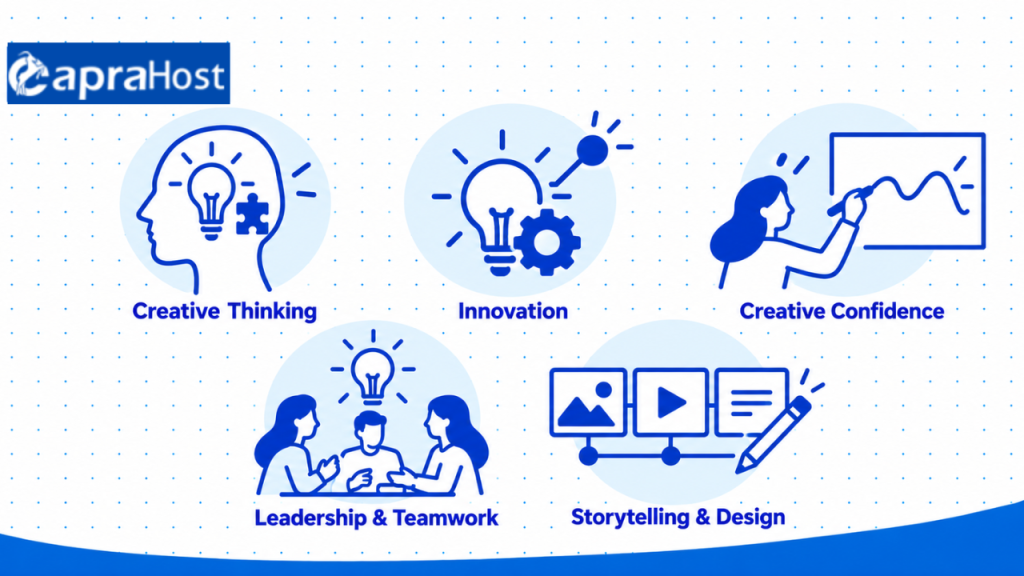
Five common creativity keynote topics include:
- Creative thinking and problem-solving: Duncan Wardle teaches practical methods for challenging assumptions and developing original solutions.
- Innovation and idea generation: Josh Linkner explains how everyday ideas can improve products, services, and business processes.
- Creative confidence: Phil Hansen demonstrates how limitations can encourage experimentation and alternative approaches.
- Leadership and teamwork: Natalie Nixon explores curiosity, collaboration, and organizational cultures that encourage creative thinking.
- Storytelling and design thinking: Matthew Luhn teaches creative communication, while design thinking focuses on understanding human needs.
These subjects support different learning outcomes, from developing creative skills to encouraging organizational change. A workshop may involve brainstorming exercises, while an inspirational keynote may focus on personal experiences. Choose keynote topics based on what your audience should learn and apply afterward.
How to Choose the Best Creativity Speaker for Your Event
Choose the best creativity speaker by matching their expertise, presentation style, and fees to your event’s goals. The selection process should begin with what attendees need to learn or achieve. Then compare speakers using consistent criteria rather than popularity alone.
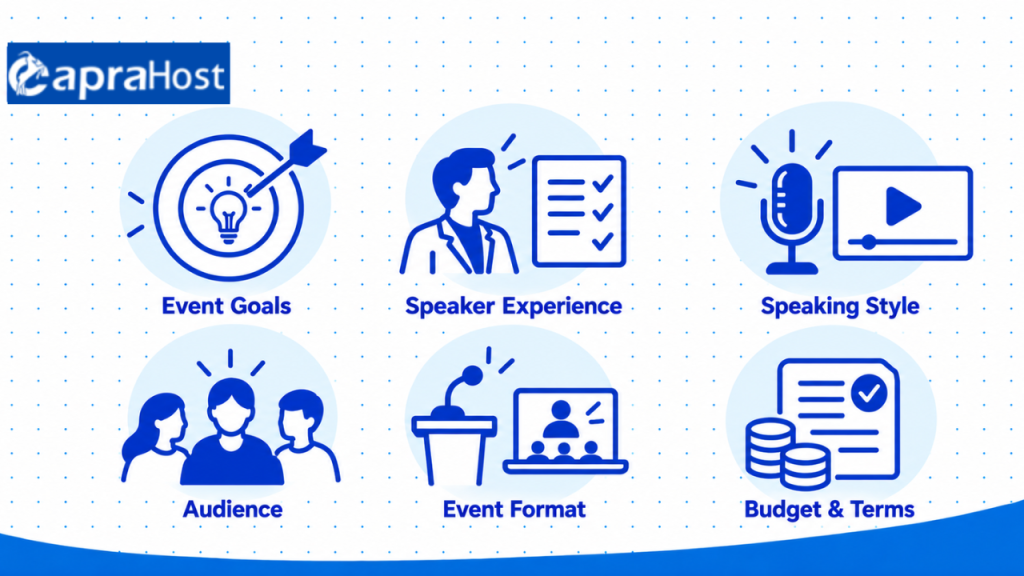
Match the Speaker to Your Event Goals
Identify whether your event should encourage innovation, teach practical skills, or inspire professional growth. Duncan Wardle emphasizes interactive creativity, while Jon Dorenbos focuses on resilience and motivation. These approaches serve different purposes despite both encouraging fresh perspectives.
Write down two or three specific learning goals before contacting a speaker. An innovation workshop might focus on idea generation, while a leadership event might emphasize collaboration. Clear objectives help organizers identify relevant expertise and avoid unsuitable bookings.
Check Their Experience and Speaking Style
Review two or three keynote videos and verify relevant professional achievements. Look for experience with audiences such as executives, employees, entrepreneurs, or students. Ask for references and confirm whether the speaker can customize their presentation.
Compare formats such as live demonstrations, research-based talks, and interactive workshops. Erik Wahl uses live painting, while Matthew Luhn draws on professional storytelling experience. Select the approach that supports your event’s objectives and audience expectations.
Consider Your Audience, Format, and Budget
Confirm whether your event requires an in-person keynote, virtual presentation, or hands-on workshop. Request a written quote detailing speaking fees, travel expenses, customization, and session duration. Also check recording rights, technical requirements, payment conditions, and cancellation policies.
Avoid choosing speakers based only on fame, impressive biographies, or low prices. A well-known speaker may not provide the practical methods your audience needs. The right choice combines relevant experience, appropriate delivery, and clearly defined outcomes.
How Much Does a Creativity Keynote Speaker Cost?
Creativity keynote speaker fees depend on reputation, demand, event format, and preparation requirements. A 2026 Executive Speakers Bureau analysis examined 3,547 active speaker profiles and reported an average booking cost of approximately $25,000. This is a general keynote speaker benchmark, not a verified average for the ten creativity speakers listed here.
Four factors influence speaker fees:
- Experience and reputation: Established authors, business leaders, and high-profile personalities may charge more than emerging speakers.
- Event format: In-person appearances can involve additional travel, accommodation, and production expenses.
- Presentation length: A 60-minute keynote may have different pricing from a half-day interactive workshop.
- Customization: Industry research, tailored exercises, and additional sessions can increase the quoted price.
Virtual presentations can reduce travel costs, although their speaking fees are not always lower. Workshop engagements may require additional preparation, materials, or smaller participant groups. Recording permissions and content usage rights can also affect the agreement.
Evaluate value by comparing speaker expertise, audience relevance, and expected learning outcomes. Request a complete written quote and check which services are included. Avoid treating general market averages as guaranteed prices for individual speakers.
Creativity Speakers vs. Innovation and Motivational Speakers
Creativity speakers focus on generating ideas, innovation speakers emphasize applying them, and motivational speakers encourage personal or professional growth. These categories overlap because a single keynote can address multiple objectives. Understanding the differences helps organizers choose a speaker with appropriate expertise.
- Creativity speakers: Duncan Wardle teaches original thinking and idea-generation techniques through interactive exercises.
- Innovation speakers: Josh Linkner connects creative ideas with practical business improvements and execution.
- Motivational speakers: Jon Dorenbos uses personal experiences and magic to communicate resilience, confidence, and positive change.
Choose a creativity speaker when attendees need help developing original ideas. Select an innovation specialist when your organization wants to improve products, services, or business processes. Consider a motivational speaker when the primary goal is inspiration, confidence, or resilience.
Why Creativity Speakers Matter in the Age of AI
Creativity speakers help organizations strengthen human imagination, critical thinking, and collaboration alongside artificial intelligence. AI can support activities such as content drafting, data analysis, and generating initial ideas. Human judgment remains important for evaluating originality, usefulness, and ethical implications.

The World Economic Forum’s Future of Jobs Report 2025 estimates that 39% of existing worker skills will change or become outdated by 2030. The report also identifies creative thinking as an increasingly important skill. These findings highlight the need for ongoing learning and workplace adaptability.
Speakers like James Taylor explore collaboration between people and AI-powered systems. Natalie Nixon emphasizes curiosity, imagination, and disciplined thinking within business organizations. Their approaches encourage employees to combine technological capabilities with human experience.
Creative workshops can also provide opportunities to practice these skills. Participants might use AI to generate ideas, evaluate alternatives, and develop solutions together. This approach connects technological tools with practical creative thinking and teamwork.
Frequently Asked Questions About Creativity Speakers
Who is the best creativity speaker in 2026?
There is no single best creativity speaker for every event. Duncan Wardle is relevant for interactive innovation, while Josh Linkner focuses on practical business creativity. The right speaker depends on your audience, event goals, and preferred presentation format.
What makes a great creativity keynote speaker?
A strong creativity keynote speaker combines professional expertise, clear communication, and useful learning outcomes. Relevant experience in business, design, education, or innovation can support credibility. Review keynote videos, client references, and speaking topics before making a decision.
Are creativity speakers worth hiring for corporate events?
Creativity speakers can offer value when their content addresses a clear organizational need. For example, workshops may help employees practice brainstorming and collaborative problem-solving. Their effectiveness depends on audience participation, speaker suitability, and whether learning continues after the event.
Do creativity keynote speakers offer interactive workshops?
Yes, some creativity keynote speakers provide interactive workshops alongside traditional keynote presentations. Duncan Wardle offers hands-on creativity training, while James Taylor provides collaborative innovation programs. Confirm the available format, participant capacity, duration, and planned activities before booking.
How far in advance should you book a creativity speaker?
Starting your search 6–12 months before an event can provide more booking flexibility. Availability depends on the speaker’s schedule, event location, and preparation requirements. Early planning gives organizers time to compare proposals, discuss customization, and finalize contracts.
Final Thoughts: Finding the Right Creativity Speaker
The best creativity speaker is the one whose expertise matches your event’s purpose and audience. Duncan Wardle offers interactive innovation techniques, while Natalie Nixon connects creativity with strategic leadership. Speakers like Erik Wahl and Jon Dorenbos provide alternative approaches through performance and personal storytelling.
Before booking, compare each speaker’s experience, presentation style, and expected learning outcomes. Review official keynote examples and request a complete quote for the engagement. Prioritize relevant expertise, practical value, and audience fit over popularity alone.